
PhD Candidate, Department of English, UofT
Reigning or Giving Her Tongue ‘the Reine’? Queens Articulating Sexual Consent in William Shakespeare’s Titus Andronicus and Elizabeth Cary’s The Tragedy of Mariam
In The Education of a Christian Woman, Juan Vives states, “A woman hath no power of her own body, but her husband.” Since this text was written especially for the education of his patron’s daughter, the future Mary I of England, Vives’ assumptions about married women’s bodies have disturbing implications for women’s sexual consent, especially that of queens. It implies that a queen’s sexual consent is not separate from her consent to marriage. This paper explores two early modern queen characters who complicate this view: William Shakespeare’s Queen Tamora from Titus Andronicus and Elizabeth Cary’s Queen Mariam from The Tragedy of Mariam. Both Tamora and Mariam challenge this belief that marital consent is sexual consent, yet they differ in their capacity to articulate consent. Mariam is able to confidently and clearly communicate her non-consent and her desire to pursue celibacy within her marriage. Tamora pursues extramarital affairs yet appears inhibited when trying to express her sexual desires, let alone sexual consent.
These differing characterizations of the queens and their ability to articulate consent might reflect evolving attitudes towards female monarchs and sexual consent in this period. Queen Tamora, created during the end of Elizabeth I’s reign, is depicted as a pleasure-seeking and self-interested monarch, which might reflect contemporary beliefs and biases pertaining to the first female British monarchs: Mary I, Elizabeth I, and Mary Queen of Scots. Like Tamora, her historical counterparts’ real, or rumored, choices regarding celibacy, marriage, sexual affairs, and childbearing were all viewed as affecting their power and the safety of their realm. By contrast, Queen Mariam was created in the aftermath of Elizabeth I’s rule, during the reign of her successor, James I. The relative stability of James’ reign due to his partnership with his wife and the presence of their heirs, and despite rumored affairs, might reflect how Mariam’s insistence upon her right to sexual consent is depicted as an individual’s choice rather than an inherently selfish and politically destabilizing decision.
PhD Candidate, Department of English, UofT
‘Ever content to be ruled by me’: Diego in Francis Godwin’s The Man in the Moone
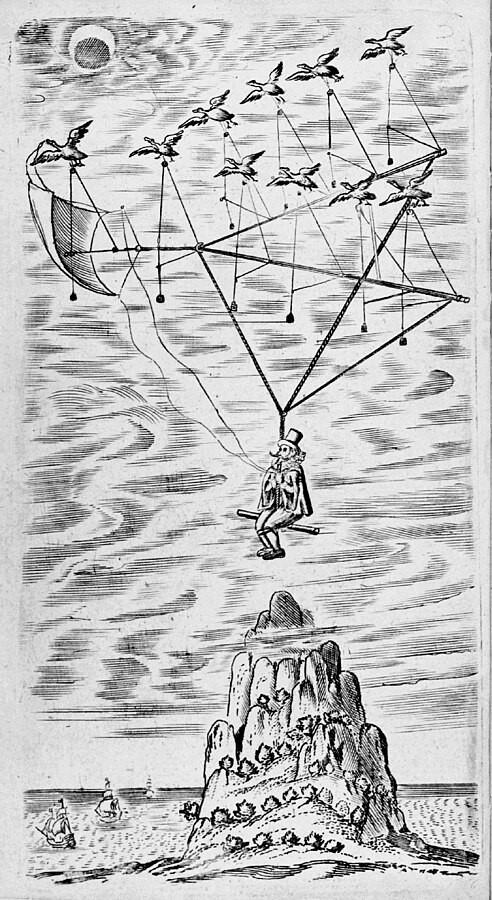
Do not be misled by the title of Francis Godwin’s The Man in the Moone (1638)! Almost half of the prose work is about the protagonist Domingo Gonsales’s travels on Earth. While crossing the Atlantic to return to Spain (and before accidentally voyaging to the moon), Gonsales spends time recuperating on the uninhabited island of St. Helena. This paper will consider the ways in which his description of the island is riddled with inconsistencies and ambiguities, with particular emphasis on his subtle evasiveness around the status of his attendant Diego. Described as a “Blackmoore” who “was ever content to be ruled by [him],” Diego is usually assumed to be a slave. This paper will draw attention to and contend for the significance of Gonsales’s reluctance to clarify his relationship to Diego. On the one hand, Gonsales is perhaps drawing on overdetermined connotations of blackness to signal Diego’s enslavement, representing St. Helena as an ideal European colony in the New World with a well-defined hierarchy founded upon a straightforward system of racial categorization. On the other, the ambiguity around Gonsales and Diego’s relationship to each other allows the reader to interpret their bond as companionable or maybe even utopian.
19 March 2024
4:00-5:30 PM
Victoria University Common Room
89 Charles St W


