

Tuesday, April 7, 2026
4:00pm–5:30pm
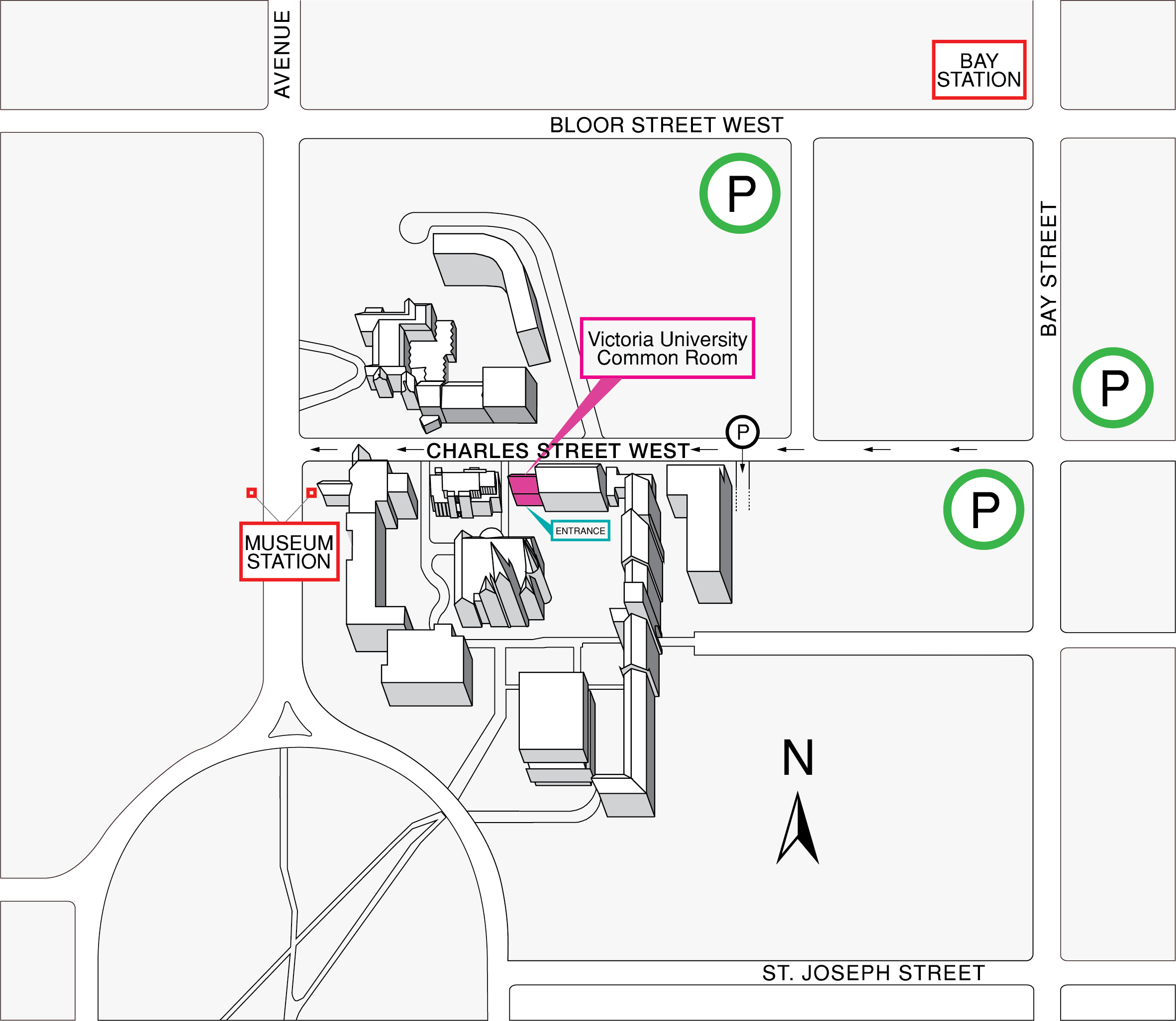
Victoria University Private Dining Room
(Second floor, above the common room)
91 Charles St W
Join us after for the CRRS Year End Party!
“Wanton Mermaids … Flinging in Favours”: Props in Dido, Queen of Carthage
Stage properties have a way of attracting attention in early modern theatre that can undermine the authority of a play’s most powerful characters. The props in Christopher Marlowe’s The Tragedie of Dido Queene of Carthage, for instance, steal the show. By commanding attention from their spectators, props translate the strife between Queen Dido and Aeneas into the stuff of comedy, not tragedy – the genre heralded by the play’s title. The play manifests Dido’s regal power through her love language of sumptuous gift-giving, a language of alluring objects that aligns her with the sirens of the sea and situates Dido as playwright and master of a theatre of desire. As I shall show, in so doing the play also affords Marlowe a way to advise obliquely Queen Elizabeth on her own use of this dangerous theatre of images. Stage props in action are the subject of my article which is forthcoming in the journal Medieval and Renaissance Drama in England. This presentation offers my argument in broad strokes before focussing on the role played by an image of a mermaid found in the CRRS rare books collections.
Was Indo-Roman Trade Beneficial to the Romans? Pliny the Elder, Montesquieu, and the Luxury Debate in Enlightenment France
In Book 21 of the Esprit des lois (1748), Montesquieu discusses the economic and sociocultural impact of Indo-Roman trade on the Roman Empire. His view, informed by Pliny the Elder, highlights the pros and cons of this trade. On the one hand, like ancient Roman source stated, Indo-Roman trade caused an important drainage of money from Rome to India, thus impoverishing the state finances. On the other hand, the spread of Indian luxuries across the Empire brought about the expansion of overseas trade, the development of industry, and the betterment of the Romans’ lifestyle. In addition, Indo-Roman trade contributed to the downfall of the Republic and the consolidation of the Principate. This view is imbued in ongoing debates about the impact of luxury and (Indian) trade on French society, which informed also contemporary Roman historiography. This lecture discusses the cultural and historiographical influences behind Montesquieu’s description of Indo-Roman trade, thus illuminating on an important chapter of Pliny the Elder’s texts in modern Europe.

Bernice Mittertreiner Neal is a contract faculty member of the Department of English at York University and a Fellow of the Centre for Renaissance and Reformation Studies (CRRS) at the University of Toronto. Her most recent publication, “‘A Young Wild Airy Girle’: Dancing in the Early English Archives,” in Performing Girls and Women: Medieval to Early Modern and Beyond, investigates connections between English medieval female performers of devotional dance and women arrested for dancing in later centuries. Research for this work comes from her collaboration with Deanne Williams on the GEES Project (Girls on Early English Stages), for which she compiles evidence of the medieval and early modern girl actor.

Giulio Leghissa holds a PhD in Classics, Ancient History and Mediterranean Archaeology from University of Toronto. He is currently Sessional Lecturer at University of Toronto. His research focuses on the reception of Classical ideas and texts in modern Western culture and on the influence of the Classics in modern Western Orientalist literature. His work focuses also on the entanglements between the study of Greek and Latin and Western colonialism in Asia.


