
Affiliate Researcher, Digital Humanities Centre, St. Francis Xavier University
Reflections on Re-Sounding the Early English Metrical Psalms
In the spring of 2023, Dr. Wylde gave an EMIGF talk that explained the premise of her then-newly begun postdoctoral project: Hearing the Metrical Psalms (1548-1665), a digital project that seeks to musically imagine and investigate the English metrical psalms. In this talk, she examined the ways in which the meanings of the psalms, both individually, and as a body of work or a community activity, were in flux as the psalms migrated through place, time, community, physical location, and from one singing body to another.
Now that the fellowship is nearing completion, this upcoming talk will report on Dr. Wylde’s process, outcomes and findings. To explore how these changes in meaning would sound, and how their sound could both reflect and contribute to their cultural meaning, she experimented with the King’s College Choir in Halifax in a lecture/performance and subsequent recording for a website-in-production in February 2024. This talk, which will include recordings, will reflect our practice and performance experience, examine what we learned about the perceived relationship between historic sound and meaning, consider the possibilities and limits inherent in acts of both live and digital historical sonification and demonstrate Dr. Wylde’s progress in translating the research into a digital project.
PhD Candidate in Art History and Visual Studies, University of Victoria
Daughter of a Sultan or Virgin Martyr Saint? Interwoven Identities as a Portrait of Early Modern Venice
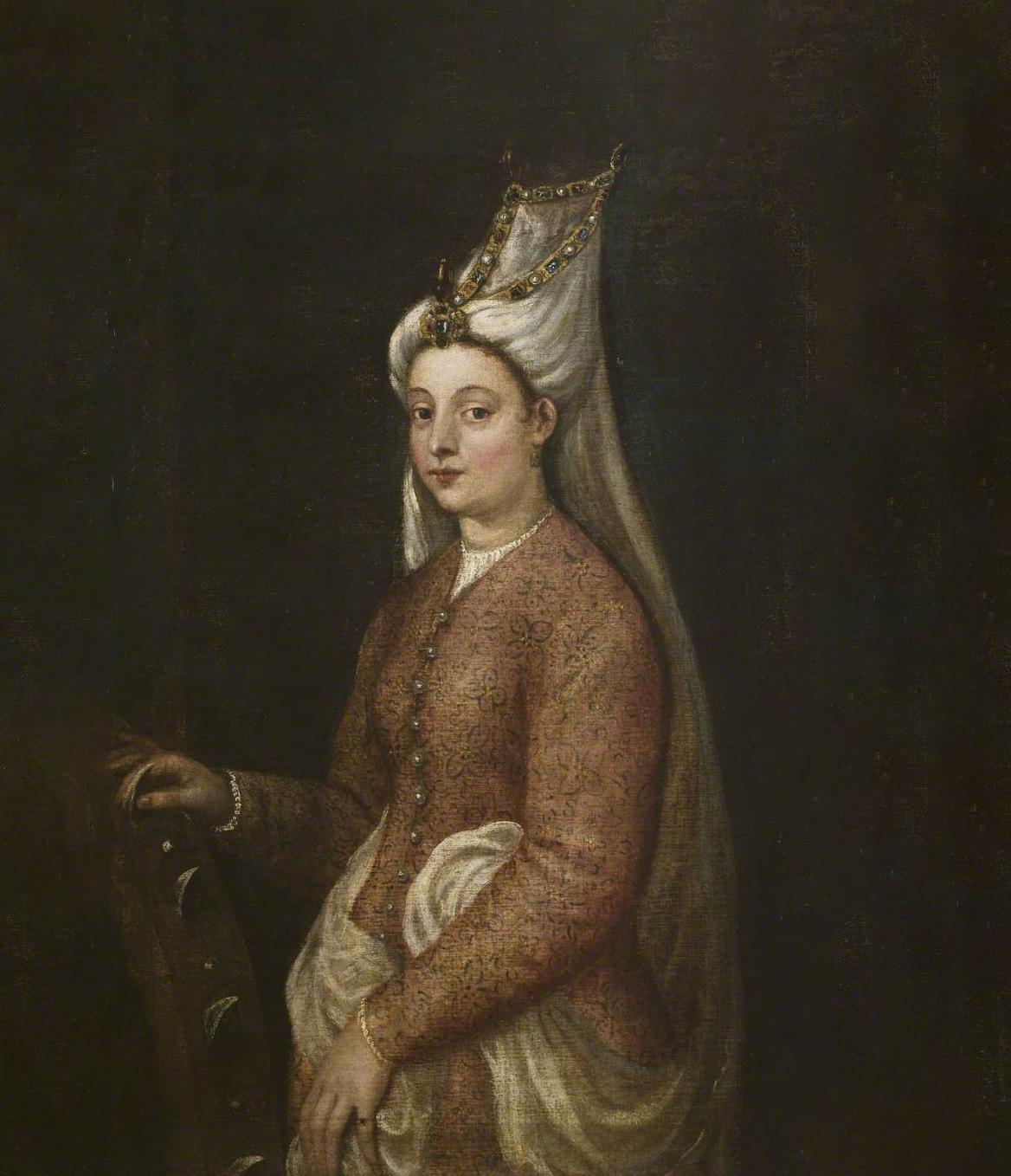
A most intriguing portrait today resides at the Courtauld Gallery. Compelling especially for the subject’s dress, she is rendered as a figure evocative of the “exotic” and yet, she is somehow familiar as a demure bella donna (“beautiful woman”). Enveloped by a long flowing white veil contained by a distinctive and opulent headdress, her right hand rests upon a spiked Wheel of Torture, the attribute of the Christian virgin martyr saint, Catherine of Alexandria.
This may be the only instance where the Wheel of St. Catherine is featured in a portrait believed to be of Mihrimah (or Cameria as she was known in European sources, d. 1578), the only daughter of the Ottoman Sultan, Süleyman the Magnificent (r. 1520-1566). Even though this portrait was created in the studio of Tiziano Vecellio (“Titian”, d. 1576), a preeminent artist of the European Renaissance, and Cameria’s portrait held a place among 400 painted portraits of noteworthy men in the collection of the influential Italian bishop and historian Paolo Giovio (d. 1552), this portrait has escaped critical art historical scholarship. This paper asks what meaning could this portrait of an elite Ottoman woman hold for the viewer in sixteenth-century Venice (and Italy) during a time when the formidable Ottoman Empire stood at Italy’s doorstep?
Tuesday, October 22, 2024. 4:00-5:30PM
Victoria University Common Room
91 Charles St W

Register for this online event here


